
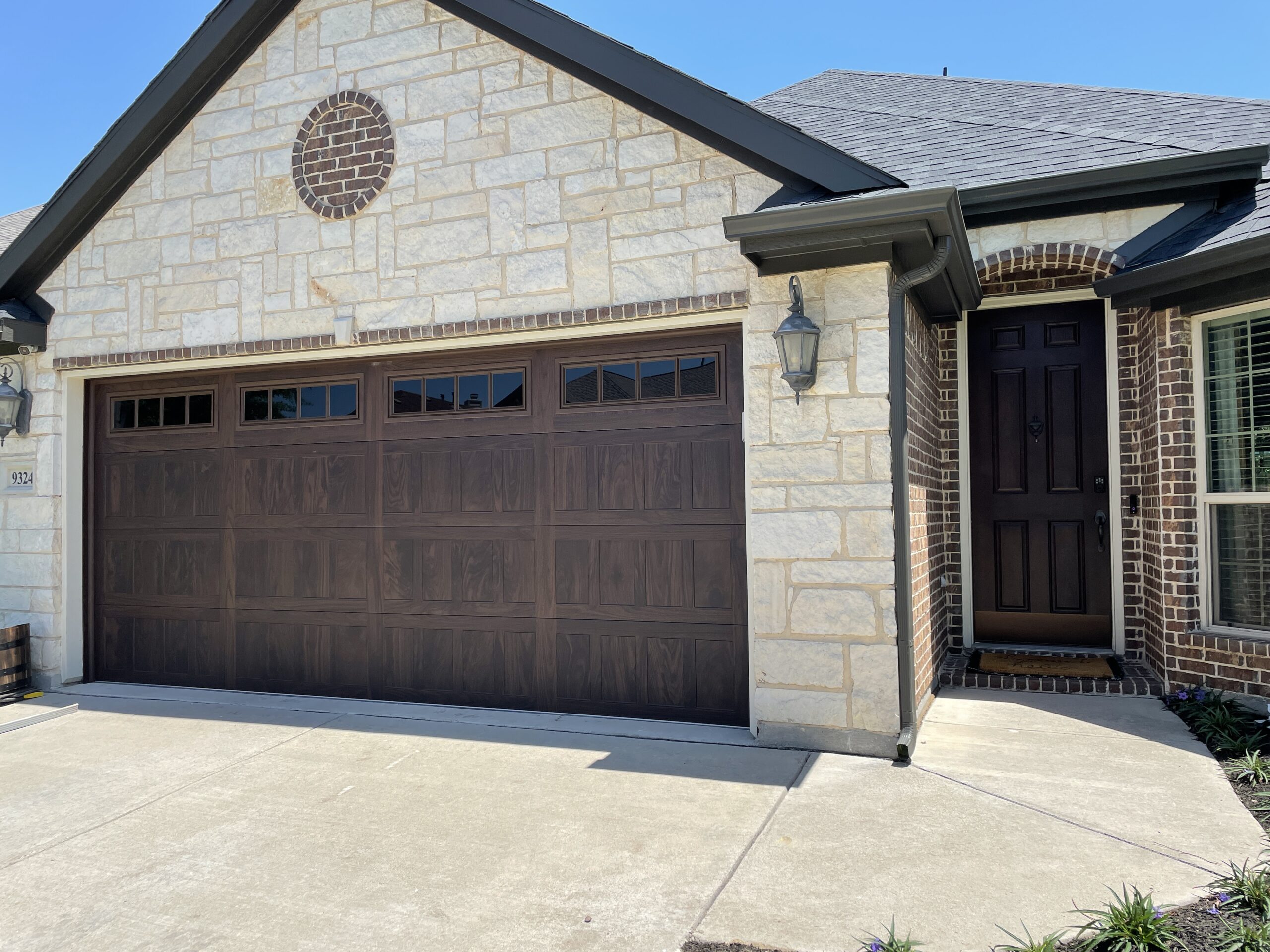
It happens more often than people admit. You’re pulling into the driveway, the kids are talking in the back seat, the sun is in your eyes, and the garage door is closing faster than you expected. Or you’re backing out and the door is partway down. Or a button gets pressed on the remote and the door comes down on the hood before you’ve cleared it.
A car hitting a garage door, or a garage door coming down on a car, is a moment of panic for a reason. The good news is that most of these incidents are minor. The bad news is that the door can be damaged in ways that aren’t obvious, and a damaged door left unaddressed is a safety issue.
Here’s what to do in the first few minutes, how to assess the damage, and when to call a professional.
The First Five Minutes
Stop and turn off the car. Put the car in park, turn off the engine, and take a breath. The adrenaline spike after an impact makes it easy to make things worse by moving too fast.
Get out and look. Don’t try to operate the door yet. Walk around the door, the car, and the garage. Look for:
- Dents in the door panels (steel, aluminum, wood, or composite)
- Bent or broken hinges
- A door that is no longer sitting flush in its tracks
- A door that has come off the track entirely
- Damaged cables, springs, or rollers
- Cracked or shattered window inserts
- Damage to the opener, the rail, or the motor mount
- Anything hanging loose that shouldn’t be
Take photos. Photograph the car, the door, the opener, and the surrounding area. Photograph any damage from multiple angles. This matters for your insurance claim and for any service call you make next.
Check for safety hazards before going further. If the door is severely damaged and hanging by a cable, don’t stand under it. If the opener is making a grinding noise or sparking, don’t touch it. If you can smell ozone or burning insulation, leave the garage and call a professional.
Check for injuries. Even a low-speed impact can cause a neck or back strain, especially if the seat belt locked. If you or a passenger feels any pain, get checked out.
Don’t Try to Operate the Door Yet
This is the most important rule. After any impact, even a small one, the door system may be damaged in ways that aren’t visible. Operating a damaged door can:
- Cause the door to come off the track and fall, potentially injuring someone
- Bend the door panels further, turning a repairable dent into a replacement
- Damage the opener, especially if a panel is jammed
- Snap a spring or cable, both of which are under high tension and dangerous to be near
A door that looks “fine” after a minor bump can be misaligned in the track. Operating it can pull the misalignment worse. The safe move is to leave the door where it is and call a service technician before using it again.
If you must move the car and the door is blocking it, the door can often be manually disconnected from the opener (pull the red emergency release cord hanging from the trolley) and lifted by hand. But this should only be done if the door itself isn’t damaged and you’re confident it isn’t going to fall.
How to Assess the Damage
A few patterns cover most garage door collision damage.
Minor cosmetic damage. A small dent in a single panel, no impact to the tracks, no impact to the springs or opener, the door still sits flush in the frame. This is a “monitor and repair when convenient” situation. The door is safe to operate for now, but the dent will worsen with cycles and may eventually need a panel replacement.
One or two bent panels with track misalignment. A more substantial impact. The door may still open and close, but it binds or makes new noises. Continued use will damage the rollers, hinges, and possibly the opener. This needs a service call soon, not immediately, but soon.
A door that has come off the track. Don’t try to operate it. A door off the track can fall at any time, and a falling garage door can cause serious injury. Call a professional.
A broken spring or cable. Springs and cables are under high tension. A broken spring is loud and obvious. You’ll hear it snap. A frayed cable is harder to spot but equally dangerous. Don’t try to operate the door or fix the spring yourself. Call a professional.
Damage to the opener. A bent rail, a broken trolley, a motor housing that’s been struck. Any of these can be a fire or shock hazard. Unplug the opener if you can do so safely, and don’t use it until a technician has looked at it.
Damage to the car. A dented hood, a broken headlight, a cracked windshield. These go through your auto insurance, not your garage door repair. The two claims are separate.
Calling a Professional vs. Handling It Yourself
The honest answer: most collision damage needs a professional, and most homeowners shouldn’t try to fix it themselves.
Call a professional if: – The door is off the track – A spring or cable is broken or frayed – The door binds or makes new noises – The opener has been struck – The door is visibly bent or warped – More than one panel is damaged
A homeowner can address: – A single small dent in a steel or aluminum panel (body work, not door work, but cosmetic only) – Replacing a damaged bottom seal – Tightening visible loose screws on hinges and brackets (after the door has been inspected and confirmed safe)
If you’re not sure, call. Most garage door companies in DFW will do an on-site assessment, and the assessment alone is worth it.
What About Insurance?
In most cases, both your homeowner’s insurance and your auto insurance are potentially in play after a garage door collision. The question is which one is the right path.
Homeowner’s insurance typically covers the garage door and the opener, since they’re part of the structure. A collision caused by normal use (you hit the door with your car, the door came down on the car, the spring snapped and damaged the car) is usually covered under the homeowner’s policy.
Auto insurance typically covers the car’s damage. The collision portion of the policy applies if the door caused damage to the car. The comprehensive portion may apply if the cause was a mechanical failure (the door came down on its own).
In practice, most homeowners file a single claim, usually the homeowner’s, for the door and let the auto damage go through the auto policy. Filing both claims for the same incident can complicate things. Your insurance agent can walk you through the right path.
Prevention: How to Avoid the Next One
A few practical habits prevent most garage door collisions.
Wait for the door to fully open before driving in. The single most common cause is a driver who pulls in while the door is still moving and the safety sensors haven’t fully cleared. Wait until the door is at the top and stopped.
Wait for the door to fully close before driving away. Same problem in reverse. The door looks closed, you back out, the door bounces on a sensor and comes back down.
Check the mirrors, not just the camera. Backup cameras help, but they don’t replace a full visual check. The camera view of the door is often foreshortened.
Service the door annually. A properly tuned door opens and closes smoothly and at a consistent speed. A door that’s been jerky or slow is more likely to be involved in a collision.
Add a smart sensor that confirms the door is open. MyQ, Tailwind, and similar devices send a notification when the door has finished opening. The visual confirmation on your phone is one more layer of protection.
Don’t let kids use the remote unsupervised. Children operating the door from the driveway is a common cause of collisions, both with the car and with people walking into the garage.
The Bottom Line
If you’ve just run into your garage door, take a breath, take photos, and don’t operate the door until you know it’s safe. Most collisions result in cosmetic damage that can be repaired or replaced without major work. A few result in track, spring, or opener damage that needs a professional.
If you’re in the DFW area and need someone to come look at the door, give you an honest assessment, and tell you what’s worth repairing versus replacing, Meadows Garage Doors serves Trophy Club, Southlake, Flower Mound, Keller, Frisco, and the surrounding communities. Work is done by the people who own the business, fully licensed and insured, and never subcontracted.