
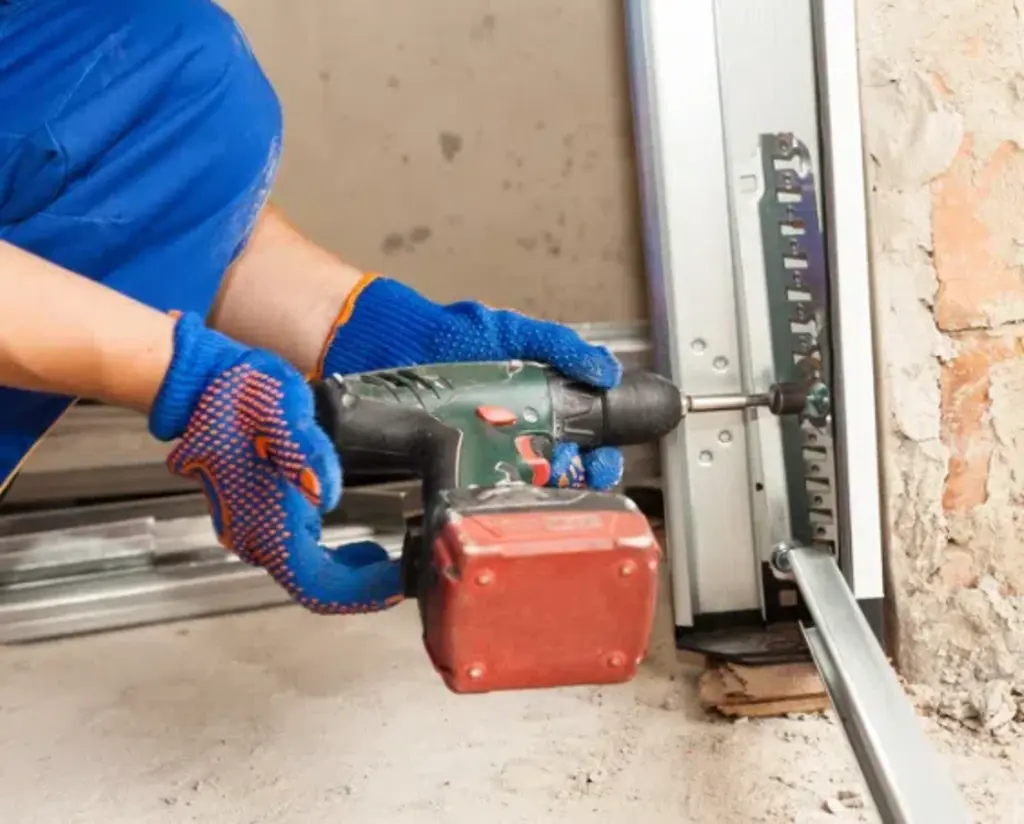
Garage door tracks are the metal channels that guide your door’s rollers as the door travels up, curves overhead, and lowers back into place. A properly aligned garage door track keeps the whole system running quietly, reduces strain on your opener and springs, and extends the life of every moving part. When tracks shift or develop even a minor bend, the effects ripple through the entire system fast.
Most homeowners never look twice at their tracks until the door starts grinding, sticking, or stops moving altogether. By then, what started as a loose bracket has often become a much bigger repair. Knowing how tracks work, what damages them, and when to act can save you a costly bill and a lot of frustration.
What Does a Garage Door Track Actually Do?
Garage door tracks are basically the metal channels mounted on each side of your garage door opening. They guide the rollers as the door travels straight up, curves along the ceiling, and lowers back into place.
Each track system has two sections. Vertical tracks that run up along the door frame and horizontal tracks that extend back along the ceiling at a very slight upward angle. That pitch keeps the door from drifting forward when it stays fully open.
Good garage door alignment keeps every moving part working within its correct range. When tracks hold the door in proper balance, the opener runs more easily, the springs wear more slowly, and the rollers stay centered in the channel.
Signs Your Tracks Are Misaligned or Damaged
A few symptoms show up fairly consistently when tracks start to fail. Catching them early can mean the difference between a quick adjustment and a much larger repair bill.
These are some of the most common garage door problems that point directly to track trouble:
- Door rubs, jerks, or stalls partway through its travel
- Grinding, scraping, or popping sounds during operation
- Visible gaps between the rollers and the track on one side
- The door looks crooked when opening or closing
- Loose brackets or bolts pulling away from the wall
In humid climates like Dallas-Fort Worth, heat and moisture can speed up rust on track metal, so regular checks are a smart habit. If your door has actually come completely off the track, you’re dealing with a garage door off track situation that needs attention right away.
How Do You Know When to Repair vs. Replace?
The condition of the track itself pretty much determines which direction to go. A technician will look at the degree of damage, the structural integrity of the metal, and how securely the mounting brackets are holding.
To repair track damage, a professional will typically straighten minor bends, re-secure loose brackets, and bring the track back into correct alignment. Minor issues like slight dents and shifted brackets generally respond well to that kind of targeted repair.
Your technician can usually tell within the first few minutes of an inspection whether the track needs straightening or a full swap. Getting that evaluation done early, rather than waiting for conditions to worsen, tends to keep repair costs more manageable.
Some track conditions do require full replacement. A professional can’t safely straighten severely kinked or twisted metal, and a track that rust has significantly weakened poses a real safety risk.
DIY Inspection and Light Adjustments
Staying on top of regular garage door maintenance is one of the simplest ways to catch track problems early. A basic visual inspection takes just a few minutes and requires no special tools.
Before touching anything, disconnect the opener and pull the emergency release cord. That way, you can work safely without any risk of the opener activating. Never loosen spring or cable hardware during this process; both are under serious tension and require professional handling.
Here is what to look for during a basic inspection:
- Each roller should spin freely by hand without wobbling or grinding
- Brackets and bolts should feel tight with no visible movement or play
- The track interior should be clear of debris, stones, or hardened grease
- Both vertical tracks should look straight and even when viewed from the front
Aligning garage door tracks starts with checking that the rollers sit centered in the channel on both sides. The most effective garage alignment techniques involve loosening the bracket bolts slightly, nudging the track with a rubber mallet, verifying position with a level, and re-tightening all bolts firmly.
If the track needs more than just a small nudge, or if you spot any structural damage, that’s really the point to stop and call a professional.
Frequently Asked Questions
How Long Do Garage Door Tracks Typically Last?
Quality steel tracks can last 15 to 20 years or more with proper care. Galvanized tracks tend to hold up longer in humid climates by resisting rust more effectively. Annual professional inspections help catch wear early and extend that lifespan significantly.
Can I Lubricate My Tracks to Reduce Noise and Friction?
Lubrication belongs on the rollers, hinges, and springs; applying it directly to the track surface attracts dust and debris. That buildup can increase friction rather than reduce it. Use a dedicated garage door lubricant and follow the product’s directions for best results.
Are There Different Types of Garage Door Tracks?
Yes, standard lift, high-lift, and vertical lift configurations are all available. The right type depends on your ceiling height, the size of your door, and how much overhead space you have. A garage door technician can recommend the correct track configuration for your specific setup.
Get Your Garage Door Running Smoothly Again
Keeping your garage door track properly aligned protects every component in the system, from the opener down to the springs and cables. Catching warning signs early, understanding the difference between a minor fix and a full replacement, and staying on top of basic inspections all add up to a longer-lasting, safer door.
When a repair goes beyond a light adjustment, Meadows Garage Doors brings nearly two decades of hands-on experience to every job. Our technicians are fully licensed, insured, and never subcontracted, and we keep our warehouse fully stocked with replacement track sections so your repair happens without delay. Call us today to schedule an inspection and get your door running the way it should.