
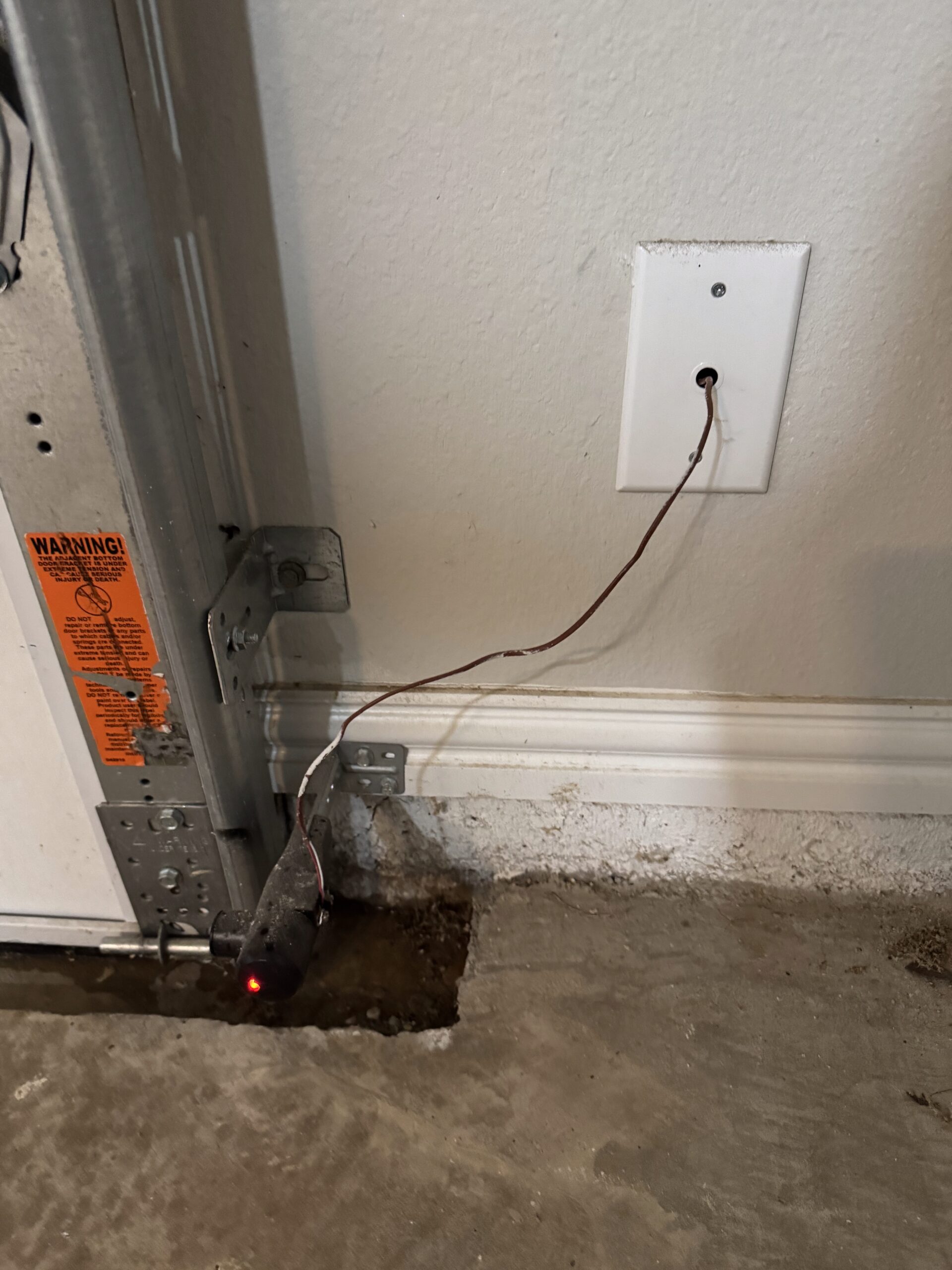
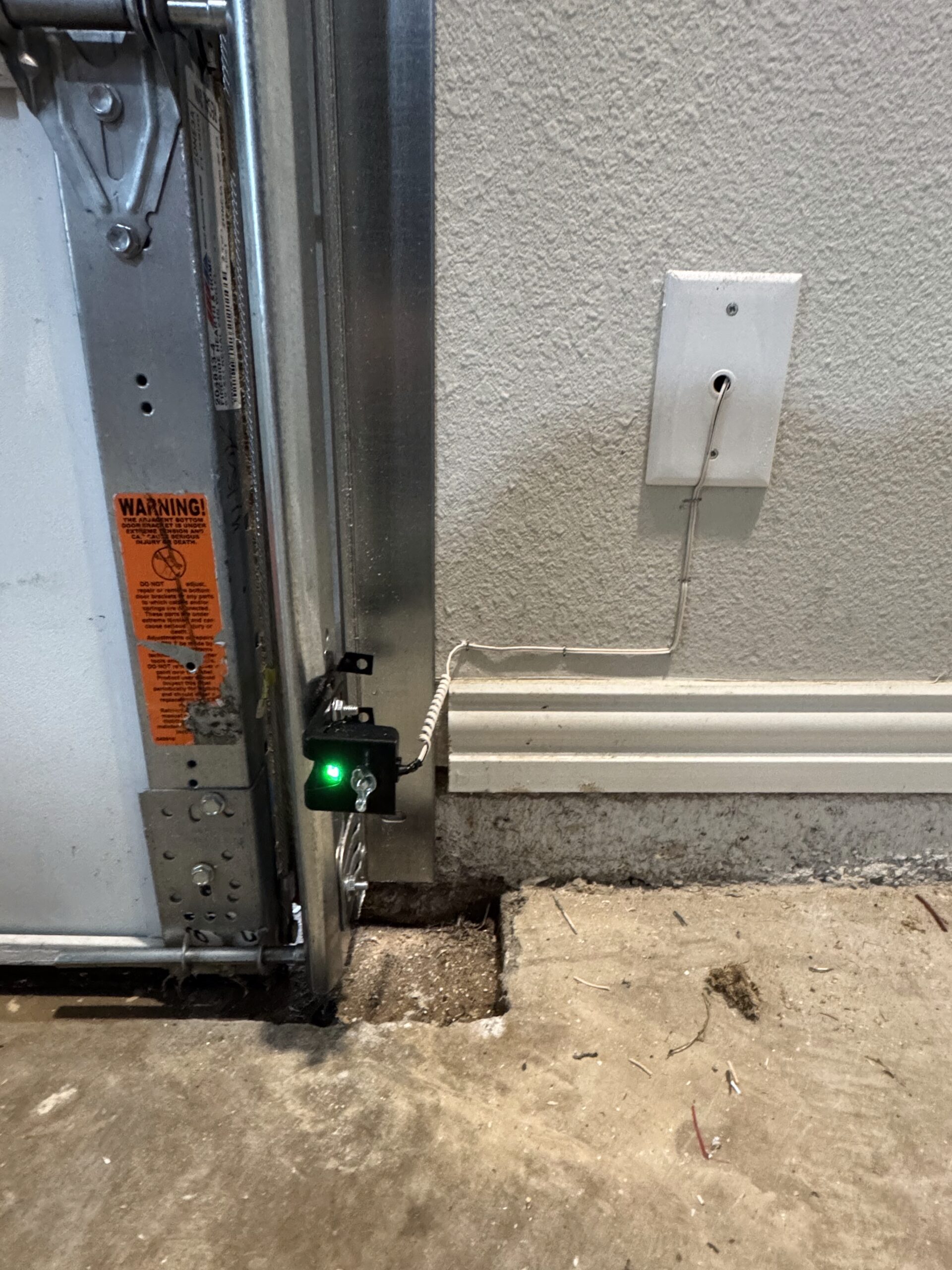
You press the button. The motor hums. The door starts down, then reverses. Or it does not move at all. A garage door that refuses to close is one of the most common calls Meadows Garage Doors receives from homeowners in Highland Village, and the cause is usually one of three things: a safety sensor problem, a bent or blocked track, or a broken spring.
Some of these issues are simple enough to spot on your own. Others require a trained technician and the right tools. If your garage door won’t close, this post will help you figure out what is going on and when to call for professional garage door sensor repair in Highland Village TX.
When the problem is the safety sensor
Garage doors manufactured after 1993 have two photo-eye sensors mounted a few inches above the floor on either side of the door. They send an invisible beam across the opening. If something interrupts that beam, the door reverses or refuses to close.
The most common sensor issue is misalignment. Over time, vibration from normal use can shift one sensor slightly out of position. A small LED light on each sensor tells you whether they are aligned. One light stays on steadily when the beam is connected. If it blinks or stays dark, the sensors are not talking to each other.
Dirt and spider webs can also block the lens. A quick wipe with a soft cloth sometimes fixes the problem. Less obvious is direct sunlight hitting the receiver at certain times of day. Homeowners in Highland Village with west-facing garages sometimes notice the door works fine in the morning but reverses in the afternoon. A piece of cardboard or a sensor hood can shade the eye and restore normal operation.
What homeowners can safely do:
- Check that nothing is blocking the door path
- Clean both sensor lenses with a dry cloth
- Verify both sensors face each other squarely
- Watch for sunlight interference during peak hours
If the lights are aligned and the path is clear but the door still reverses, the wiring or the logic board inside the opener may be at fault. That is when you need a technician. Meadows Garage Doors carries replacement sensors and opener components on every truck, so most sensor problems are resolved in a single visit.
When the track is bent or blocked
The metal track on each side of your garage door guides the rollers as the door moves. If the track gets dented from a stray basketball or knocked out of place by a car bumper, the rollers can bind. The opener detects resistance and reverses the door to prevent damage.
A bent track is easy to spot if you know what to look for. Stand inside the garage with the door closed and look at the vertical tracks on each side. They should be perfectly straight from top to bottom. Any dimple, bow, or gap between the track and the wall is a problem.
Small obstructions inside the track can also stop the door. A pebble, a wad of leaves, or a broken roller fragment can jam the works. You can remove visible debris with the door fully open and the opener unplugged. Do not attempt to bend the track back into shape with a hammer or pliers. The alignment tolerances are tighter than they look, and a poorly repaired track will chew through rollers in a matter of weeks.
Track damage is often linked to other wear. A door that has been operating with a bent track for months may also have damaged rollers or worn cables. Meadows technicians inspect the entire system, not just the obvious symptom, so the fix lasts.
When a broken spring is the real culprit
The springs above your garage door do the heavy lifting. They counterbalance the weight of the door so a one-horsepower opener can lift hundreds of pounds without straining. When a spring breaks, the door becomes dead weight.
You can often tell a broken spring from the other side of the garage. Look at the coiled torsion spring mounted on the wall above the door. If you see a two-inch gap in the coil, the spring has snapped. You may also hear a loud bang, like a firecracker, when it happens. After that, the door feels heavy to lift manually and the opener strains or refuses to move it.
A broken spring is not a DIY repair. The tension stored in a garage door spring is enough to cause serious injury. Meadows Garage Doors has replaced thousands of springs across Highland Village, Southlake, and Keller. Our technicians arrive with the right size spring already on the truck, measure the door weight and track geometry on site, and install a matched pair with a full warranty.
If you suspect a spring problem, read our earlier post on garage door torsion spring matching to understand why getting the correct size matters. A mismatched spring will wear out faster and can damage the opener.
Other causes worth checking
Not every non-closing door fits the big three. A stripped gear inside the opener can make the motor run without moving the door. A frayed cable can let one side of the door drop, causing the opener to detect uneven load and reverse. And in rare cases, a damaged circuit board interprets a normal signal as an obstruction.
Weather can also play a role. After a cold front, metal tracks contract slightly. A door that worked fine in September may stick in January. Highland Village sees enough temperature swing to make seasonal expansion a real factor. If the door closes fine once the sun warms the garage but sticks on cold mornings, the track alignment may need seasonal adjustment.
What same-day repair looks like at Meadows
When you call Meadows Garage Doors for a door that will not close, we ask a few quick questions to gauge urgency and likely cause. Is the car trapped inside? Is the door stuck open, leaving the home exposed? Is there a visible gap in the spring?
Our technician arrives with a fully stocked truck. For sensor issues, we carry universal and brand-specific photo eyes. For track problems, we have replacement track sections and brackets on every truck. For spring failures, we keep a full inventory of wire sizes and lengths. Most repairs are finished within an hour or two.
We serve Highland Village, Southlake, Keller, and the broader Dallas-Fort Worth area from our Trophy Club headquarters. Every repair is backed by our workmanship guarantee, and we never subcontract. The technician who shows up at your door works for Meadows.
Preventing the next failure
The best way to avoid a garage door that won’t close at the worst possible moment is regular upkeep. Lubricate the rollers and hinges twice a year. Test the safety reversal monthly by placing a two-by-four under the door and running a close cycle. Inspect the cables and springs visually every few months for rust or wear.
Homeowners who want a thorough checkup can schedule a fall garage door tune-up with Meadows. Our fall maintenance visit covers lubrication, tension checks, sensor alignment, and weather seal inspection. Catching a frayed cable or a weakening spring before it fails saves you the stress of an emergency call later.
If your garage door won’t close in Highland Village and you have ruled out the quick fixes, call Meadows Garage Doors for same-day service. We will get it sorted fast and safely at a fair price.