
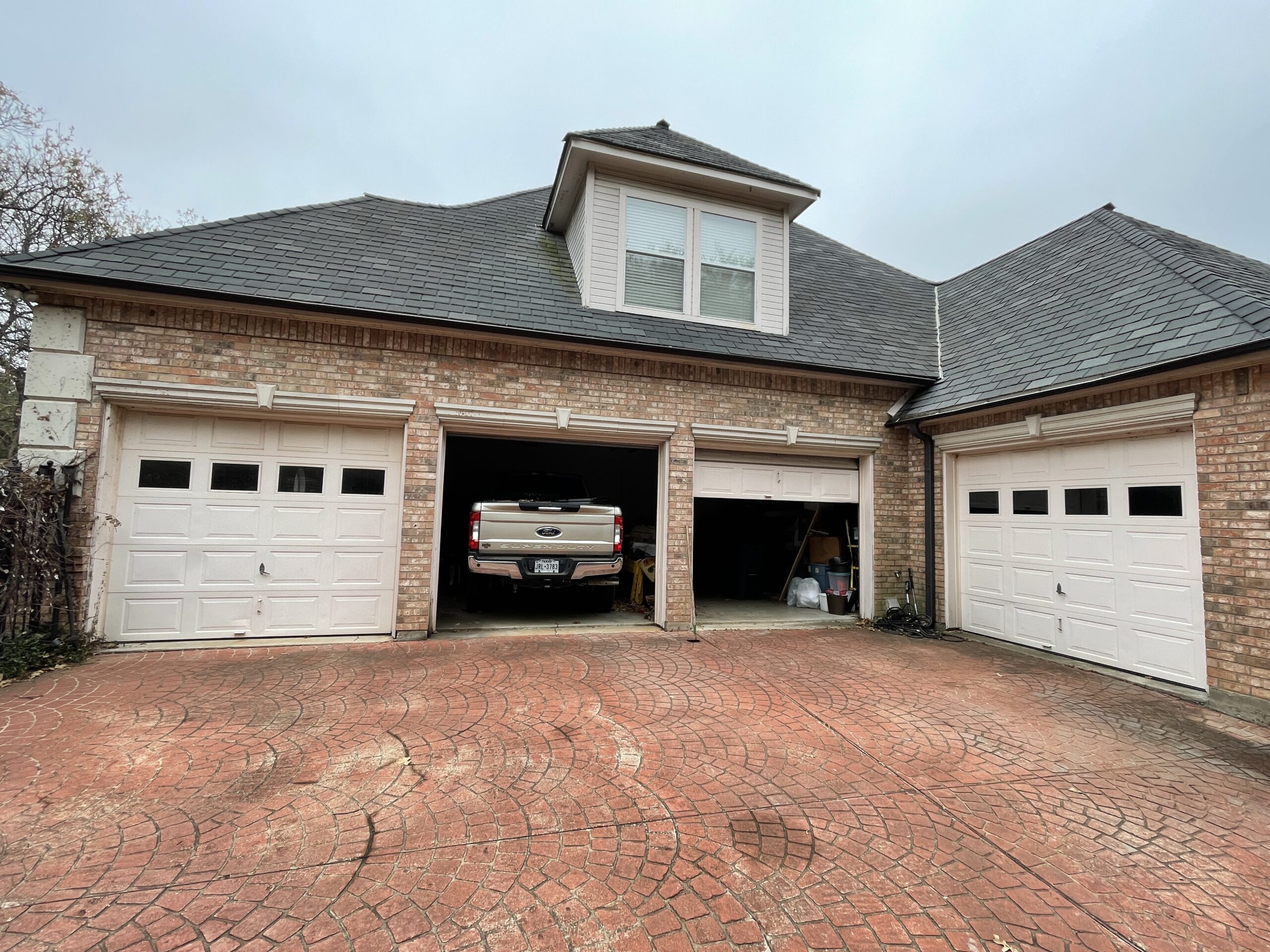
You hear it late at night. The garage door rumbles open while everyone is asleep. Or you come home from work to find the door standing wide open, and nobody in your household touched the remote. When a garage door opens by itself, it is not just an annoyance. It is a direct threat to your home security.
For homeowners in Trophy Club, Keller, Southlake, and across the DFW area, an uncommanded opening can mean stolen tools, bikes, or worse, access to the interior of your home. Understanding why this happens, how to diagnose it, and how to stop it is the first step toward protecting your property and your peace of mind.
Why This Is a Bigger Problem Than It Sounds
A garage door is the largest entry point in most homes. When it opens without your input, every item stored inside becomes visible and accessible. That includes lawn equipment, stored furniture, bicycles, vehicles, and potentially the door leading into your house. In neighborhoods around Flower Mound and Roanoke, where garages often face the street, an open door is an open invitation to anyone passing by.
Beyond theft, there is the issue of weather. An open garage door during a North Texas thunderstorm can flood your space in minutes. During a summer day, it lets in blistering heat that warms your entire home and drives up energy bills. During the cooler months, it invites cold drafts that force your heating system to work overtime. In short, a door that opens on its own creates risk on multiple fronts, from security to comfort to cost.
There is also the psychological toll. A door that opens randomly makes homeowners anxious. You start second-guessing whether you remembered to close it. You check the app repeatedly. You lie awake listening for the motor. That stress is not sustainable, and it points to a problem that needs a real solution.
Common Causes of a Garage Door That Opens By Itself
If your door has started opening randomly, the root cause usually falls into one of five categories. Each one carries a different level of urgency and a different fix.
Radio Frequency Interference
Garage door openers communicate with remotes and wall controls through radio signals, typically in the 300 to 400 megahertz range. When those signals clash with other devices operating on a similar frequency, the opener can receive a phantom command. This is especially common after pairing new remotes, adding a smart controller, or installing a new wireless device in your home.
Common sources of interference include: – Neighboring garage door openers programmed to a similar code – Baby monitors, wireless routers, or security cameras – New LED light bulbs near the opener motor – Recently installed smart home hubs – Ham radio operators or CB radios in the vicinity
If the random openings began right after you added a new remote or smart device, interference is the most likely culprit. Some homeowners have found that a new neighbor’s opener is broadcasting on the same frequency, causing both doors to respond to either remote.
Modern openers use rolling code technology that changes the signal with every use, which largely eliminates this problem. Older openers with fixed codes are far more susceptible.
Stuck or Faulty Remote Buttons
A remote buried in a glove compartment, a junk drawer, or a purse can get squeezed by keys, tools, or other items. If the button is held down long enough, the signal transmits and the door responds. Over time, remote buttons can also wear out and stick in the pressed position. Even a wall-mounted control panel with a sticky or damaged button can trigger an unwanted opening.
This is one of the easiest causes to rule out. Remove all remotes from vehicles and bags. Store them in a place where they cannot be accidentally activated. If the random openings stop, you have found your answer.
Wiring Shorts or Electrical Issues
The low-voltage wiring that runs between your wall button, safety sensors, and opener motor is susceptible to damage. Rodents chewing through wires, staples pinching cables during installation, or old wiring degrading inside walls can all create a short circuit. When two wires touch unintentionally, the opener reads it as a command to open or close.
This issue tends to produce other symptoms too. You might notice the opener light flickering, the door reversing for no reason, or the wall button behaving inconsistently. Wiring shorts can also cause the opener to activate at completely random times, day or night, because the damaged wires are making intermittent contact.
If you suspect wiring damage, do not attempt to repair it yourself. Low-voltage wiring is still connected to a powered system, and incorrect handling can damage the logic board or create a fire hazard.
Power Surges and Electrical Events
North Texas is no stranger to lightning storms and grid fluctuations. A power surge can scramble the logic board inside your opener, corrupting the stored codes or causing erratic behavior. Even if your home did not lose power during a storm, a nearby strike can induce enough voltage to affect electronics through the wiring.
If your opener started acting strangely after a recent storm in the DFW area, a power surge may have damaged the circuit board. Symptoms include random openings, failure to respond to remotes, and the opener light flashing unexpectedly.
A surge protector on the opener’s power outlet can help prevent future damage, but it will not fix a logic board that has already been compromised.
Smart Home Glitches and App Conflicts
Smart garage door controllers like MyQ, Alexa integrations, and HomeKit bridges add convenience, but they also add complexity. Firmware updates, app permissions, and automated routines can misfire. A forgotten schedule set six months ago might suddenly start triggering openings. A voice command misheard by a smart speaker can send the wrong signal.
Smart controllers also depend on Wi-Fi stability. A brief drop in connectivity followed by a reconnection can sometimes register as a toggle command. If your router reboots overnight, the brief interruption can cause the smart controller to issue a phantom command when the connection restores.
Review your smart home app for any forgotten schedules, routines, or automations. Check the activity log if your app provides one. You may find that a scheduled event or an automation triggered by another device is the source of the unwanted openings.
How Neighboring Openers Can Cause Interference
In dense DFW neighborhoods, garage door opener signals can overlap. If your neighbor recently installed a new opener or reprogrammed a remote, their signal may be operating on a frequency close enough to yours to trigger occasional openings. This is more common with older openers that use fixed codes rather than rolling codes.
If you suspect a neighbor’s opener is causing the problem, try changing your opener’s frequency or code. Most modern openers allow you to program a new code by pressing a button on the motor unit and then pressing the remote. If the random openings stop after changing the code, interference was likely the cause.
Rolling code technology, found in openers manufactured after the mid-1990s, largely eliminates this problem by generating a new code with every use. If your opener is more than 20 years old, upgrading to a modern unit with rolling codes solves both the interference issue and the security risk of fixed-code systems.
How to Diagnose the Problem Safely
Start with the simplest explanations first. Remove all remotes from vehicles and drawers. Replace any that show physical wear. Check the wall button for sticking or damage. If the problem stops, you have found your cause.
Next, review any recent changes. Did you install a new router, baby monitor, or LED bulb near the opener? Did you program a new remote or connect a smart controller? If so, revert those changes temporarily to see if the behavior stops.
Inspect the wiring running from the wall button and sensors back to the opener motor. Look for chewed insulation, exposed copper, or pinched sections. Do not touch bare wires, but note what you see.
Try changing the opener’s code if your model allows it. This can eliminate interference from a neighboring remote. Consult your opener’s manual for instructions on programming a new code.
If none of the above reveals the cause, the issue likely lives inside the opener unit itself, either on the logic board or in the motor assembly.
When DIY Ends and Professional Help Begins
There is a point where diagnosing a garage door opener crosses from homeowner territory into professional territory. If you have eliminated remotes, wiring damage, and smart device conflicts but the door still opens randomly, the problem is almost certainly inside the opener.
Internal circuit board issues require specialized testing equipment and replacement parts. Working inside an opener unit also exposes you to live electrical components. For homeowners in Trophy Club and surrounding communities, calling a licensed technician is the safer and faster path to resolution.
A professional can also assess whether your opener is worth repairing or whether replacement makes more sense. Openers more than ten years old with logic board damage may not be worth the repair cost, especially given the security features built into modern units.
What to Do If You Suspect Someone Is Interfering With Your Opener
In rare cases, a garage door that opens by itself may be the result of intentional interference. Older openers with fixed codes can be accessed by code-grabbing devices that capture and replay the remote signal. Criminals sometimes use these devices to open garage doors in neighborhoods where they know older openers are common.
If you live in an area of DFW where property crime has been reported, or if your door has opened while you were away from home, consider whether unauthorized access is a possibility. Signs include the door opening at times when no one is home, or the opener light activating without explanation.
If you suspect interference, stop using the remote until a technician can evaluate the system. Unplug the opener when you leave for extended periods. And consider upgrading to a modern opener with rolling code encryption, which changes the signal with every use and cannot be captured or replayed.
Security Upgrades Worth Considering
If your opener has opened randomly even once, it is worth treating the incident as a wake-up call. Modern garage door openers include rolling code technology that changes the access code every time the remote is used. This makes it nearly impossible for a signal to be captured and replayed by a third party.
Consider these additional security measures: – Upgrade to an opener with rolling code technology if yours does not already have it – Add a garage door monitor that alerts your phone if the door opens unexpectedly – Install motion-activated lighting inside the garage – Keep the door leading from the garage into your home locked at all times – Disconnect smart controllers if they prove unreliable, until a technician can evaluate the setup – Consider a smart garage camera that records activity and sends alerts
The Meadows Garage Doors Approach
At Meadows Garage Doors, we have helped homeowners across DFW resolve opener issues for nearly two decades. We know how unsettling it is to realize your largest entry point has a mind of its own. Our technicians arrive prepared to diagnose interference, wiring, circuit board, and smart controller issues in a single visit.
We do not subcontract our work. Every technician on your property is a Meadows employee, fully licensed and insured. We serve Trophy Club, Keller, Southlake, Flower Mound, and the surrounding communities with same-day availability for security-related opener problems.
If your garage door opens by itself and you cannot find the cause, do not wait for it to happen again. The next uncommanded opening could come at the worst possible time. Call Meadows Garage Doors, and we will get your opener secured, tested, and working reliably.
Related Articles
- garage door opener troubleshooting — If your opener is also showing other symptoms
- remote control issues — Problems with remotes can also cause phantom signals
- smart garage door upgrades — If you are considering upgrading to a modern opener