
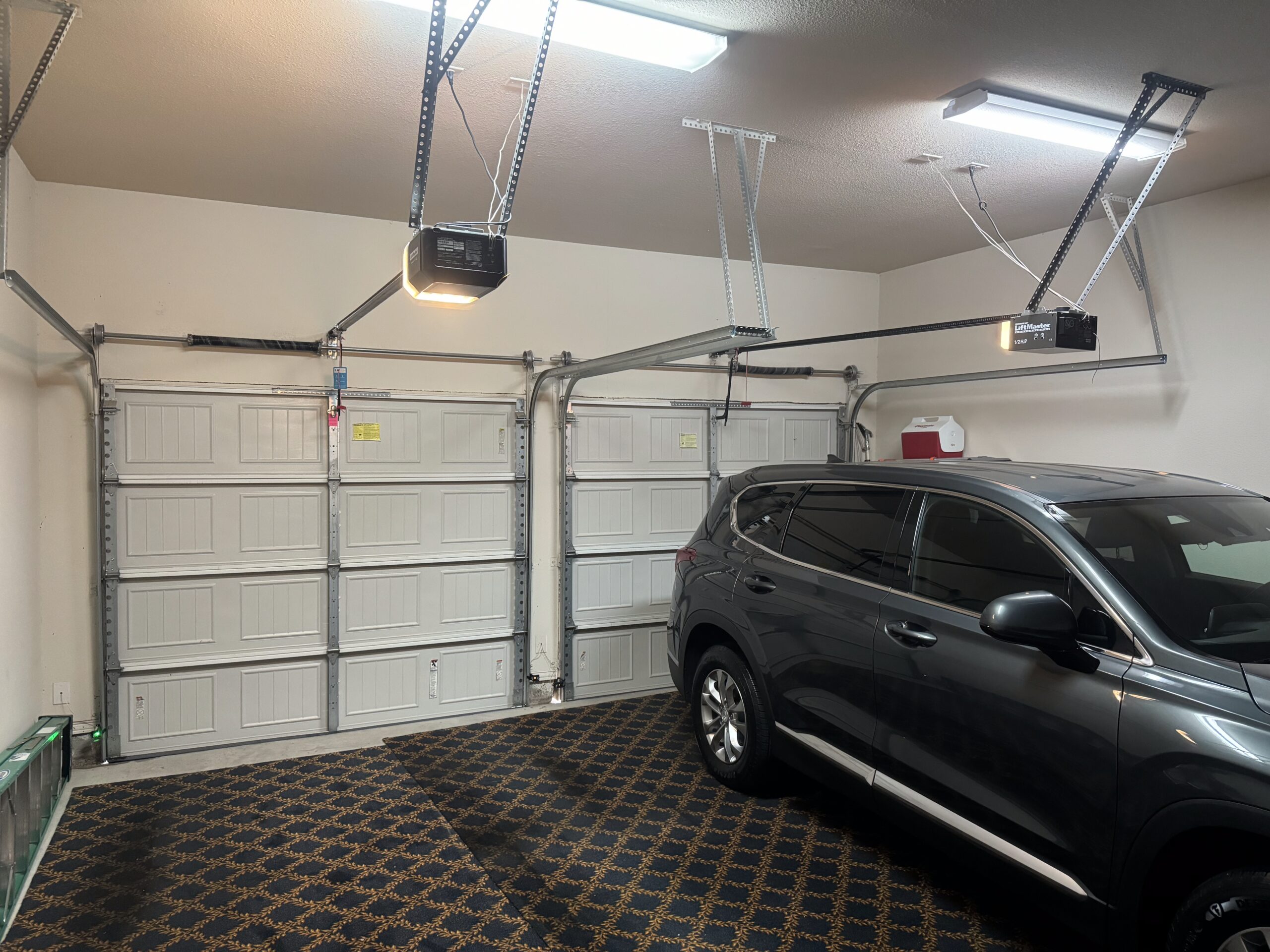
A garage door spring can snap without warning. One minute the door is working fine. The next, you hear a sound like a gunshot from above the garage and the door refuses to budge. But springs rarely fail out of nowhere. They send signals first. Most homeowners miss them because they do not know what to look for.
This post explains the early warning signs of a failing torsion or extension spring, why a delayed repair costs more than a quick one, and how Meadows Garage Doors replaces springs safely. If you suspect a problem with your spring, or you just want to know what to watch for, keep reading.
What the spring actually does
Your garage door weighs between one hundred fifty and four hundred pounds depending on size and material. The electric opener does not lift that weight directly. It pushes or pulls the door while the springs do the heavy lifting. Torsion springs, mounted on a bar above the door, wind and unwind to counterbalance the load. Extension springs, running along the horizontal tracks, stretch and contract for the same purpose.
When the spring is healthy, the door feels light. You can lift it with one hand when the opener is disconnected. When the spring weakens or breaks, the full weight drops onto the opener, the cables, and the track hardware. Everything downstream works harder and wears out faster.
Visual signs of a failing spring
The easiest way to check a torsion spring is to look at it. Stand inside the garage with the door closed and examine the coil above the header. A healthy spring has tight, uniform coils with no visible gaps. A failing spring may show one or more of these symptoms:
A gap in the coil. When a torsion spring breaks, it separates into two sections with a clear space between them. This is an unmistakable sign that the spring is done.
Rust and corrosion. North Texas humidity and temperature swings cause surface rust on ungalvanized springs. Once rust sets in, the metal weakens and the spring loses tension. A rust bloom on the coils means the spring is aging faster than it should. Homeowners in Highland Village and Dallas who notice rust should call for a garage door inspection and tune-up before the spring fails completely.
Slack cables. The lift cables run from the bottom of the door up to the drum near the spring assembly. When a torsion spring breaks, the cables often go slack because there is no tension holding them tight. If you notice drooping cables, the spring is the likely culprit.
Extension springs have their own warning signs. Look for stretched coils, visible wear where the spring rubs against the track, and broken safety cables. Extension springs should always have a containment cable running through the center to prevent them from flying if they snap.
Sounds that signal trouble
A healthy spring is nearly silent. A failing spring makes noise. The most dramatic is the loud bang of a torsion spring snapping. It happens without warning and can be startling enough to send homeowners outside looking for a car accident.
Before the snap, you may hear popping or creaking as the spring coils rub against each other. This happens when the spring has lost tension and the coils are no longer separating cleanly during operation. You may also hear the opener straining. A motor that suddenly sounds louder or slower is often working against a weakened spring.
If your door has started making new noises, our post on garage door opener clicks but the door won’t move covers another common failure that sounds similar but has a different cause.
How the door feels when you lift it
The manual lift test is the best way to gauge spring health. Disconnect the opener by pulling the red release cord. Lift the door halfway by hand and let go. A properly balanced door should stay in place. If it drops closed, the spring is too weak. If it shoots upward, the spring is too strong. Either condition means the spring tension is wrong.
If the door feels heavy to lift at all, the spring has lost significant tension. You should not need two people to raise a residential garage door manually. If you do, the spring needs professional attention.
Do not attempt to adjust the spring yourself. The tension required to balance a garage door is measured in hundreds of pounds. The winding bars used to add or release tension are specialized tools. Using the wrong equipment or technique can cause severe injury.
Why DIY spring replacement is dangerous
Online tutorials make spring replacement look straightforward. They rarely mention the risks. A torsion spring stores enough energy to launch a winding bar across the garage with enough force to break bone. Every year, homeowners end up in emergency rooms after attempting this repair without training.
Beyond the immediate physical danger, there is the risk of improper sizing. Springs are rated by wire gauge, coil diameter, and overall length. A spring that is slightly too long or too short will overwork the opener, wear out the cables, and eventually fail again. Meadows technicians measure your door weight, track radius, and headroom before selecting the replacement. We install matched pairs so the tension is even on both sides.
How Meadows handles spring replacement
When you call Meadows Garage Doors for a spring issue, we treat it as a priority. A broken spring makes your home vulnerable and your vehicle inaccessible. We aim to schedule same-day service whenever possible.
Our technician arrives with a full inventory of torsion and extension springs in common sizes. We measure the door on site to confirm the exact specification. The old spring is removed safely using proper winding bars and tension release procedures. The new spring is installed, wound to the correct number of turns, and tested for balance.
After the spring is replaced, we inspect the cables, rollers, and opener. A broken spring often causes secondary damage that needs attention. We lubricate the new spring and the rest of the hardware before we leave.
Every spring replacement comes with a warranty. The exact term depends on the spring grade, but we stand behind our work. If a spring fails prematurely due to a defect or installation error, we fix it at no charge.
The cost of waiting
A weak spring does not get stronger with time. It gets weaker. The longer you wait, the more stress you place on the opener motor, the cables, and the track hardware. An opener that struggles against a bad spring will eventually burn out its gears. Cables that snap under uneven load can damage the door panels. What starts as a two-hundred-dollar spring job becomes an eight-hundred-dollar system overhaul.
There is also the risk of the door falling. A spring can snap while the door is in motion. If the safety cables are worn or improperly installed, the door can drop hard enough to dent panels, damage vehicles, or injure anyone nearby.
Homeowners who want to stay ahead of spring failure can schedule a garage door tune-up with Meadows. Our fall inspection checks spring tension, cable condition, and overall system balance so problems are caught early.
Spring lifespan: what to expect
A standard torsion spring is rated for about ten thousand cycles. One cycle is one full open and close. If you use your garage door four times a day, you will hit ten thousand cycles in roughly seven years. Heavy daily use shortens the lifespan. So does Texas heat, which causes metal fatigue over time.
High-cycle springs are available for households that use the door more often. These are rated for twenty thousand or more cycles and use thicker wire. They cost more upfront but last twice as long. Meadows offers high-cycle upgrades during replacement if your usage pattern justifies the investment.
When to call Meadows
If you see a gap in the spring, hear a loud bang, notice slack cables, or the door suddenly feels heavy, call Meadows Garage Doors. We serve Trophy Club, Highland Village, Southlake, Keller, Roanoke, Dallas, Flower Mound, Lewisville, and the full DFW area from our local headquarters.
Do not risk injury by attempting a DIY fix. Contact Meadows for safe, same-day garage door spring repair from a team that has handled thousands of replacements across North Texas.