
A broken torsion spring is one of the most common and most dangerous garage door failures. When it happens, many homeowners turn to the internet, find a spring that looks close, and place an order. That approach almost always ends in disappointment, wasted money, and sometimes a door that is more dangerous than when the spring broke.
Matching a garage door torsion spring is not about finding something similar. It is about finding the exact spring your door was engineered to use. Three measurements, wire diameter, inside diameter, and overall length, control everything about how the spring performs. Get any one of them wrong, and the door will not balance properly, the opener will strain, and the hardware will wear out prematurely.
For homeowners in Trophy Club, Keller, Southlake, Flower Mound, and across the DFW area, understanding why these measurements matter can help you appreciate why torsion spring replacement is a job best left to professionals.
What a Torsion Spring Actually Does
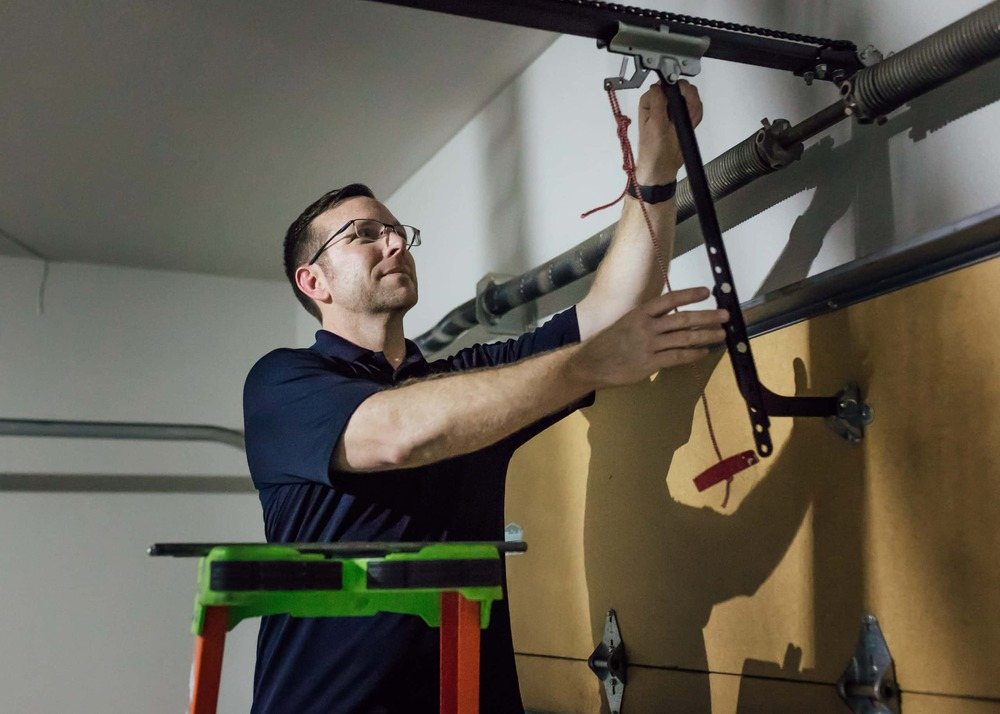
The torsion spring sits horizontally above the garage door, wound tightly around a steel shaft. When the door is closed, the spring is fully wound and storing energy. When you open the door, either manually or with the opener, the spring unwinds and releases that energy to lift the door. When the door closes, the opener or your muscles wind the spring back up, storing energy for the next opening.
This system is elegant and efficient. A properly matched spring makes a two-hundred-pound door feel light enough to lift with one hand. An improperly matched spring makes the door feel heavy, causes the opener to overwork, and creates uneven wear across the entire system.
The torsion spring system is found on the vast majority of residential garage doors because it is reliable, compact, and powerful. Extension springs, which run along the sides of the door, are less common in modern installations but still found on some older homes.
The Three Measurements That Control Everything
Every torsion spring is defined by three numbers. Each one plays a distinct role in how the spring behaves, and each one must be accurate to within fractions of an inch.
Wire Diameter
Wire diameter is the thickness of the steel wire coiled to form the spring. It is measured in thousandths of an inch, and even a small difference changes the spring’s lifting power dramatically. A spring with a wire diameter of 0.234 inches is not interchangeable with one that measures 0.250 inches, even though the difference looks tiny on paper.
Wire diameter determines the spring’s strength. Thicker wire means a stronger spring that can lift more weight but requires more force to wind. Thinner wire means a weaker spring that winds more easily but cannot support as much door weight.
Measuring wire diameter accurately requires a caliper or micrometer. Using a tape measure or ruler is not precise enough. The measurement must be taken on an uncoiled section of the wire, which means handling a spring that is under tension or partially unwound. This is one of the first places homeowners get into trouble when trying to measure their own springs.
The wire diameter also determines the spring’s cycle life. A spring with thicker wire will typically last longer because the stress per coil is lower. Most residential springs are rated for 10,000 cycles, but the actual lifespan depends heavily on the wire diameter and how well the spring matches the door weight.
Inside Diameter
Inside diameter is the width of the hollow center of the spring. It determines whether the spring will fit onto the torsion shaft already installed above your door. Common inside diameters include 1.75 inches and 2.00 inches, but other sizes exist depending on the manufacturer and the door weight.
If the inside diameter is too small, the spring will not slide onto the shaft. If it is too large, the spring will fit loosely, rattle during operation, and distribute force unevenly across the cones and shaft. Over time, this mismatch can damage the shaft, the bearing plates, and the end bearings.
Inside diameter is measured with a tape measure across the open center of the spring. It must be measured while the spring is relaxed, which means the spring must be fully unwound before measurement. On a broken spring, this is straightforward because the tension is already released. On an intact spring, unwinding it safely requires specialized winding bars and knowledge of how to release tension without injury.
Overall Length
Overall length is the total length of the spring when it is relaxed, measured from end to end. It is not the number of coils. It is the physical length of the spring body.
Length controls how many times the spring can wind and unwind before reaching its mechanical limits. A longer spring can store more energy and provide a wider range of motion. A shorter spring reaches its limit sooner and may not provide enough lift for a door that travels a full seven or eight feet vertically.
If you install a spring that is too short, it will be fully wound before the door reaches the open position. The remaining lift must come from the opener or your muscles, which defeats the purpose of the spring system. If the spring is too long, it may not wind tight enough in the closed position to provide adequate lifting force.
The number of coils also matters, though it is derived from the wire diameter and overall length rather than measured directly. A spring with the same wire diameter and length but a different coil count will behave differently because the spacing between coils affects how the spring stores and releases energy.
Why Ordering Online Without Measuring Is Risky
The internet makes it easy to find garage door parts, but torsion springs are not universal items. Retailers that sell springs online typically list them by wire diameter, inside diameter, and length, but the burden of accurate measurement falls entirely on the buyer.
Several things can go wrong. The markings on an old spring may be worn or rusted, leaving you to guess at the wire size. A previous homeowner may have installed the wrong spring already, meaning the spring on your door is not the right one to copy. A measurement taken with the wrong tool can be off by fractions of an inch, which is enough to make the replacement spring incompatible.
Even if you measure correctly, springs sold online are not always manufactured to the tight tolerances required for safe garage door operation. A spring that is slightly shorter or slightly thicker than specified can create an unbalanced door that wears out the opener, the cables, and the rollers.
Shipping is another concern. Torsion springs are heavy, and shipping costs add to the expense. If you order the wrong size, you pay return shipping and wait for a replacement, all while your garage door remains inoperable.
The Safety Case for Professional Installation
Torsion springs are under extreme tension. A standard residential spring stores enough energy to lift a two-hundred-pound door, which means it also stores enough energy to cause severe injury if released unexpectedly.
Winding a torsion spring requires inserting solid steel bars into the cogs of the winding cone and adding tension in controlled increments. If a bar slips, the spring can unwind violently, throwing the bar with enough force to break bones or penetrate drywall. The torque generated by a slipping bar can also wrench the technician’s wrist, shoulder, or back.
Professional technicians use calibrated tools, tested procedures, and years of experience to install springs safely. They also know how to check the door’s balance after installation, adjust the spring tension precisely, and verify that the opener is not overloaded.
The risk is not theoretical. Emergency rooms in the DFW area treat homeowners every year for torsion spring injuries. The most common injuries are broken fingers and hands, but more severe trauma including facial injuries and compound fractures occur when winding bars become projectiles.
What Happens When the Wrong Spring Is Installed
An incorrectly matched spring creates a cascade of problems. If the spring is too weak, the door feels heavy to lift and the opener strains every time it runs. The motor works harder, draws more current, and overheats. The drive gear strips prematurely. The cables wear unevenly because the door is not lifting straight.
If the spring is too strong, the door may fly upward too quickly, slam into the opener rail, or jump the tracks. The safety sensors may trigger unnecessarily. The opener’s force settings may need constant adjustment. Over time, the excessive upward force damages the top panel, the hinges, and the header hardware.
In both cases, the door is unsafe. An unbalanced garage door is a liability that puts property and people at risk every time it moves. Children and pets are particularly vulnerable because they may not recognize the danger of a heavy door that moves unexpectedly.
The Danger of Mixing Spring Types
Some homeowners discover that their door has two springs and assume any matching pair will work. In reality, the two springs must be identical in every measurement. If one spring is replaced with a different size, the door lifts unevenly. One side rises faster than the other, stressing the cables, rollers, and hinges. Over time, this imbalance warps the door panels and damages the tracks.
Dual-spring systems are common on heavier doors, such as insulated two-car models. If one spring breaks, both should be replaced even if the second spring still appears functional. Springs that have been in service together have experienced the same cycles and are likely near the end of their lifespan. Replacing one and leaving the other is a gamble that usually ends with a second service call within months.
What Meadows Garage Doors Does Differently
When you call Meadows Garage Doors for a broken spring, we do not ask you to measure anything. Our technician arrives with a fully stocked truck carrying springs in a wide range of wire diameters, inside diameters, and lengths. We measure your door’s existing hardware, weigh the door to determine its actual mass, and select a spring matched precisely to your specific installation.
We install the spring using proper winding bars and safety protocols. We test the door’s balance at multiple positions. We adjust the spring tension until the door stays in place at any point in its travel. We inspect the cables, rollers, and opener to make sure nothing else was damaged when the old spring broke.
We have been serving Trophy Club, Keller, Southlake, Flower Mound, and the broader DFW area for nearly two decades. Every technician is a Meadows employee. We do not subcontract our work, and we are fully licensed and insured.
If your torsion spring broke, resist the urge to order a replacement online. The measurements matter, the installation is dangerous, and the consequences of getting it wrong are serious. Call Meadows Garage Doors, and we will match your spring correctly and install it safely.