
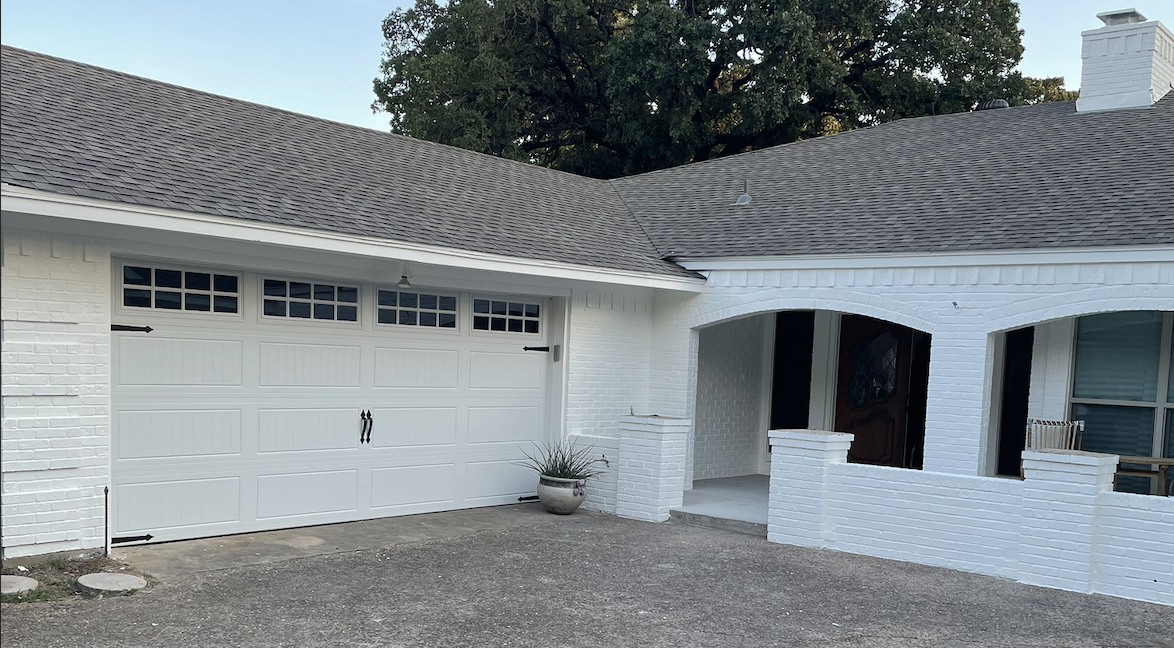
North Texas is no stranger to severe weather, and hail is one of the most destructive forces a garage door can face. When a hailstorm rolls through Trophy Club, Keller, Southlake, or Flower Mound, the damage can range from cosmetic dings to structural compromise that leaves your home vulnerable to water, pests, and break-ins.
Knowing what to look for after a storm, how to distinguish minor damage from serious problems, and when to involve your insurance company can save you thousands of dollars and protect your home from further harm.
How Hail Damages a Garage Door
Garage doors are large, flat surfaces that face the elements directly. During a hail event, the impact energy depends on the size of the hailstones and the wind speed driving them. Even small hail can leave dents in aluminum or steel panels. Larger hailstones, especially those exceeding golf ball size, can crack panels, bend tracks, and knock the door out of alignment.
The damage is not always visible from the outside. Insulated doors have an interior layer that can absorb impact without showing immediate signs on the exterior. Over time, however, the compromised insulation can allow moisture inside, leading to mold, rot, and degradation of the door’s structural integrity.
Hail driven by high winds can also damage the weatherstripping, the bottom seal, and the trim around the door frame. A direct hit to the window inserts on a carriage-style door can shatter the glass, creating a safety hazard and an entry point for water.
Hidden Damage You Might Miss
Not all hail damage is obvious. A door that looks fine from the driveway may have compromised insulation, weakened internal bracing, or micro-cracks in the finish that will expand over time. After a major hail event, it is worth having a professional inspection even if you do not see obvious dents.
The interior side of an insulated door can reveal damage that the exterior hides. If the interior facing shows bulging, separation between layers, or moisture stains, the hail impact has damaged the insulation core. This reduces the door’s thermal performance and creates a path for water infiltration.
Window inserts are another vulnerable area. Even if the glass did not break, the impact may have loosened the frame or damaged the seal around the insert. Water can seep in through these compromised seals and damage the interior panel over time.
Temporary Protections While You Wait for Repair
If you cannot get a technician out immediately after a storm, there are temporary steps you can take to protect your home. Apply plastic sheeting or a tarp over damaged window inserts to prevent water intrusion. Use a rolled-up towel at the bottom of the door if the seal is torn. Move valuable items away from the door in case of further weather events.
These are short-term measures only. They do not restore the door’s security or insulation, and they should not replace professional repair. Think of them as bandages that buy you a day or two until a technician arrives.
Do not attempt to bend dented panels back into shape with a hammer or mallet. You can crack the paint, damage the insulation, or create sharp edges. Leave dent removal to professionals who have the right tools and techniques.
What to Inspect Immediately After the Storm
Once the storm passes and it is safe to go outside, conduct a visual inspection of your garage door from multiple angles. Hail damage is often easiest to see when light hits the surface at an angle, so check in both direct and indirect light.
Exterior Panel Inspection
Look for dents, dings, and cracks across all panels. Pay special attention to the top panels, which often take the brunt of the storm. Run your hand lightly across the surface to feel for depressions that may not be obvious visually. On textured or wood-grain steel doors, dents can be harder to spot but still affect the panel’s strength.
If you have a carriage-style door with decorative hardware, check that the hinges, handles, and trim pieces are still securely attached. Hail impact can loosen fasteners or bend decorative elements.
Track and Hardware Check
Hail does not just hit the door panels. High winds can blow debris into the tracks, bending or denting the metal rails that guide the door. Open and close the door manually if possible and listen for grinding, catching, or resistance. If the door does not move smoothly along the tracks, the rails may need realignment or replacement.
Inspect the rollers for damage and the cables for fraying. Hail-driven debris can nick cables or knock rollers out of their tracks. Check the springs for signs of impact or stress. A large hailstone striking the spring assembly can damage the coils or the mounting hardware.
Seal and Weatherstripping
Check the bottom seal and the perimeter weatherstripping. Hail can tear or compress rubber seals, creating gaps that allow water, dust, and pests into your garage. In North Texas, where summer storms often bring heavy rain, a compromised seal can lead to flooding inside the garage.
Look for cracks, tears, or sections that have pulled away from the door or frame. Even minor damage to the seal should be addressed promptly, as it will worsen with every subsequent storm.
When a Dented Door Can Be Repaired
Not every dented door needs to be replaced. The decision depends on the extent of the damage, the material of the door, and the age of the unit.
Steel doors with isolated dents can sometimes be repaired using paintless dent removal techniques or panel replacement. If only one or two panels are damaged and the door is relatively new, replacing the affected panels is often the most cost-effective approach. This preserves the door’s insulation, hardware, and finish while restoring its appearance.
Aluminum doors dent more easily than steel, but they also repair more easily in some cases. Because aluminum is softer, skilled technicians can often massage dents out without replacing the panel. However, deep dents or creases may still require panel replacement.
Wood doors present a different challenge. Hail can crack or split wooden panels, and moisture can penetrate the damage quickly. If the door is stained or painted wood, repairs involve filling, sanding, and refinishing. For older wood doors, matching the finish can be difficult, and full replacement may make more sense.
When Damage Means Full Replacement
There are situations where repair is not practical or safe. You should consider full replacement if any of the following apply:
- Multiple panels are damaged, especially on different sections of the door
- The door is out of alignment and does not move smoothly along the tracks
- The structural frame or hardware is bent or cracked
- The door is more than fifteen years old and already showing wear
- Insulation has been compromised, allowing moisture inside the panels
- The cost of panel-by-panel repair approaches the cost of a new door
- The door no longer seals properly against the frame, creating gaps
A compromised garage door is not just an aesthetic problem. It is a security problem, an energy efficiency problem, and a safety problem. A door that cannot close properly or seal against the frame leaves your home exposed.
Insurance Claim Tips Specific to North Texas
Insurance companies in Texas process thousands of hail claims every year. To make sure your claim moves smoothly, follow these guidelines.
Document everything before touching the door. Take photos in good light from multiple angles. Include close-ups of dents, cracks, and damaged seals. Photograph any interior damage too. The more documentation you provide, the harder it is for an insurer to dispute the extent of the damage.
Get a professional inspection before the adjuster arrives. An independent assessment from a qualified garage door company gives you leverage if the insurance estimate comes in too low. At Meadows Garage Doors, we provide written damage reports that adjusters respect because they are detailed and objective.
Do not sign anything or accept a settlement until you understand the full scope of the damage. Some insurers offer quick payouts that cover visible dents but miss structural problems that show up months later. If the door needs replacement, the settlement should reflect the cost of a comparable new door, not just patchwork repairs.
Why Prompt Action Matters
Delaying hail damage repair is a mistake that grows more expensive over time. In North Texas, the cycle of heat, humidity, and rain accelerates deterioration. A dented panel that has cracked the exterior finish will rust. A compromised seal will let water pool inside the garage. A door knocked out of alignment will wear out the opener motor and the track hardware.
Water intrusion is the hidden danger. Once moisture gets inside an insulated panel, it is nearly impossible to dry out. The insulation loses its effectiveness, the internal frame can corrode, and mold can develop. By the time you notice a musty smell or see water stains, the damage has spread beyond the initial dent.
Security is another concern. A door that does not close properly or seal against the frame can be forced open more easily. For homeowners in Trophy Club, Keller, and Southlake who store valuable equipment, vehicles, or tools in their garages, an unrepaired door is an unlocked door.
Energy efficiency also suffers. A dented or misaligned door cannot seal properly, allowing hot air in during the summer and cold air in during the winter. Your heating and cooling system works harder to compensate, and your utility bills reflect the loss.
The Meadows Garage Doors Hail Damage Process
When you call Meadows Garage Doors after a hailstorm, we start with a thorough inspection that goes beyond surface dents. We check the door’s structural integrity, track alignment, seal condition, and hardware function. We provide a clear written estimate and explain whether repair or replacement makes more sense for your specific situation.
If insurance is involved, we handle the documentation and communication with your adjuster. We have helped hundreds of DFW homeowners navigate hail claims, and we understand the urgency of getting your door secure and functional again.
We are locally owned and operated, with nearly two decades of experience serving North Texas. Every technician is a Meadows employee. We do not subcontract our work, and we are fully licensed and insured.
If your garage door took a beating in the latest storm, do not wait for the damage to get worse. Call Meadows Garage Doors for a professional assessment and honest guidance on the best path forward.
Related Articles
- hail season prep — Before the next storm season hits
- insurance claims — Filing a claim after storm damage
- DFW cold snap problems — Other seasonal threats to your garage door