
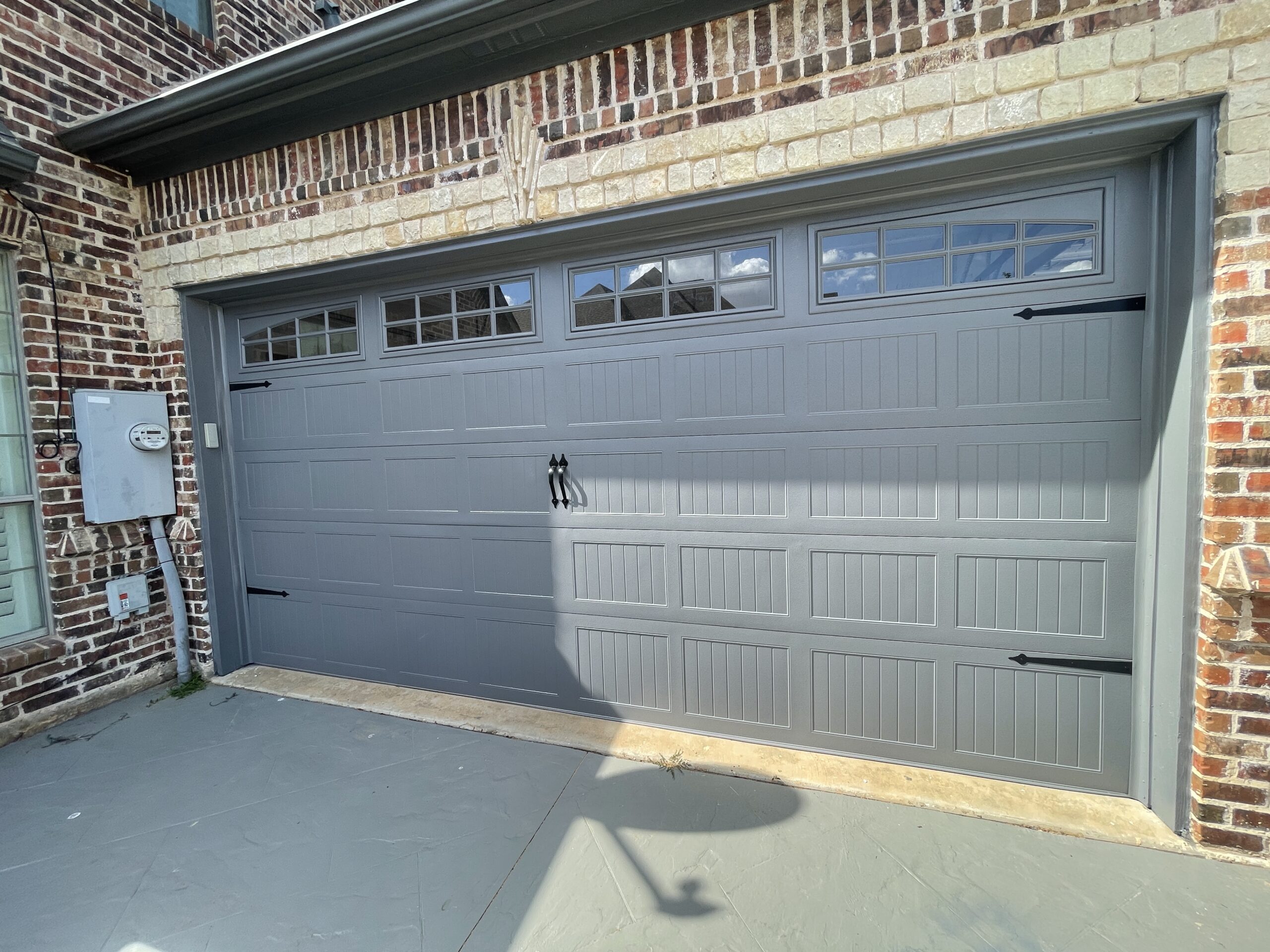
You step into the garage on a Saturday morning, hit the opener button, and something just sounds off. Maybe the door shudders. Maybe it takes longer than it used to. Or maybe it reverses halfway up for no clear reason. If you live in Keller, you’re not imagining it. North Texas heat, UV exposure, and hailstorms punish garage doors harder than most homeowners realize. The good news: your door usually tells you what’s wrong before it fails completely. You just need to know what to listen for and what to look for. If you’re already dealing with a broken door, Meadows offers fast garage door repair in Keller, TX and surrounding neighborhoods. Our garage door repair services cover everything from spring adjustments to full opener replacements.
The sound your door makes is a warning
A healthy garage door is relatively quiet. If yours has started making noise, the specific sound matters.
- Squeaking usually means worn rollers or hinges that need lubrication. It is often the earliest warning sign and the easiest to address.
- Grinding is more serious. It typically points to metal-on-metal contact, often from a failing opener gear or a roller that has completely worn through its bearing. Grinding will not fix itself and usually gets worse fast.
- Rattling often means loose hardware. The constant vibration of daily operation slowly backs out bolts and screws. This is especially common in new construction homes which are still settling. A rattling door may also have a track that has shifted slightly out of alignment.
If your door has gone from whisper-quiet to clanking metal, it is worth reading our full garage door noise diagnosis guide to narrow down the cause before it becomes a bigger repair.
When the door moves slower than it used to
A garage door that used to open in 10 to 12 seconds and now takes 15 or more is not just inconvenient. It is a sign that the springs or cables are losing tension.
Torsion springs do most of the heavy lifting. Over time, especially under the stress of Keller’s 100-degree summer days, they weaken. A slow-moving door puts extra strain on the opener motor, which costs more to replace than a spring.
Cables can also fray or stretch. If one cable is weaker than the other, the door will lift unevenly. That uneven load accelerates wear on the tracks, rollers, and hinges.
The rule is simple: if the door is slower today than it was six months ago, something is degrading. Catching it early means a spring adjustment or garage door cable replacement instead of a full opener rebuild.
Gaps, dents, and visible damage after North Texas storms
Keller sits in the heart of hail country. A March or May storm can leave dents in the door panels that look cosmetic but create real problems. Dented panels add weight, throw off door balance, and create gaps that let hot air into the garage.
UV damage is less obvious but just as real. South and West-facing doors in Keller neighborhoods like Hidden Lakes and Marshall Ridge take years of direct sun. That heat warps weather stripping, fades finishes, and weakens panel adhesion on insulated doors.
Look for these specific signs after a storm or at the start of summer:
- Panels that no longer sit flush with each other
- Gaps at the bottom or sides of the closed door
- Weather stripping that is cracked, flattened, or pulling away
- Paint or finish that is bubbling or peeling
Visible damage is not just a curb appeal issue. A compromised door seal forces your HVAC system to work harder if the garage is attached, and it lets pests in through gaps you cannot see from the driveway.
When the occasional DFW cold snap hits, the temperature swing from 20 degrees to 70 degrees in 48 hours stresses seals and springs in the opposite direction. Learn more about garage door cold weather problems.
The door won’t stay open or reverses unexpectedly
If your garage door starts to close after you have opened it, or reverses before hitting the ground, the safety sensors are the first thing to check. In Keller’s intense summer heat, direct sunlight can blind photoelectric sensors. A quick adjustment of the sensor angle or a piece of cardboard shielding often fixes it.
If the sensors are clean, aligned, and shaded but the door still reverses, the issue is usually mechanical. Track sections can expand slightly in heat, creating just enough resistance to trigger the opener’s safety reverse. A bent track, even a small one, does the same thing.
Doors that drift closed when partially open are often suffering from spring imbalance. One spring may be weaker than the other, or a spring may have broken internally without snapping completely. This is dangerous: a door under partial spring failure can fall without warning.
Your opener works harder than before
You can hear it in the motor. The opener labors. The light flickers. The unit hums longer than it used to. These are all signs that the opener is doing more work than it was designed for.
When springs weaken, the opener has to lift almost the full weight of the door instead of a balanced load. A standard residential door weighs 150 to 200 pounds. A 1/2-horsepower opener is not meant to muscle that up every day.
If your opener is straining, the fix is almost never a new opener. It is rebalancing the door and replacing the worn springs. Fix the root cause and the opener will last years longer.
When DIY makes sense and when it doesn’t
Some checks are safe for a homeowner. Tightening a loose hinge bolt, lubricating rollers with a silicone-based spray, and clearing debris from the track are all reasonable DIY tasks.
Never attempt these repairs yourself:
- Adjusting or replacing torsion springs: they are under extreme tension and can cause serious injury or death
- Replacing cables: they are under matching tension and store enormous energy
- Realigning tracks: improper adjustment causes the door to bind or fall off
- Electrical work on the opener: incorrect wiring can damage the logic board
If you are not sure whether a repair is safe to attempt, it is not. Call a professional. The cost of a service call is far less than an ER visit or a completely failed door system.
Conclusion
Your garage door gives you warnings before it fails. The sound, the speed, the gaps, and the strain are all signals. Learning to read them saves money, prevents emergencies, and extends the life of your entire door system.
If you have noticed any of the warning signs above, the next step is a professional inspection. Meadows Garage Doors serves Keller, Trophy Club, Southlake, Flower Mound, and the greater DFW area. Our technicians are background-checked, insured, and never subcontracted.
Schedule your garage door repair in Keller, TX with Meadows today, or contact us to schedule a service call at a time that works for you.