
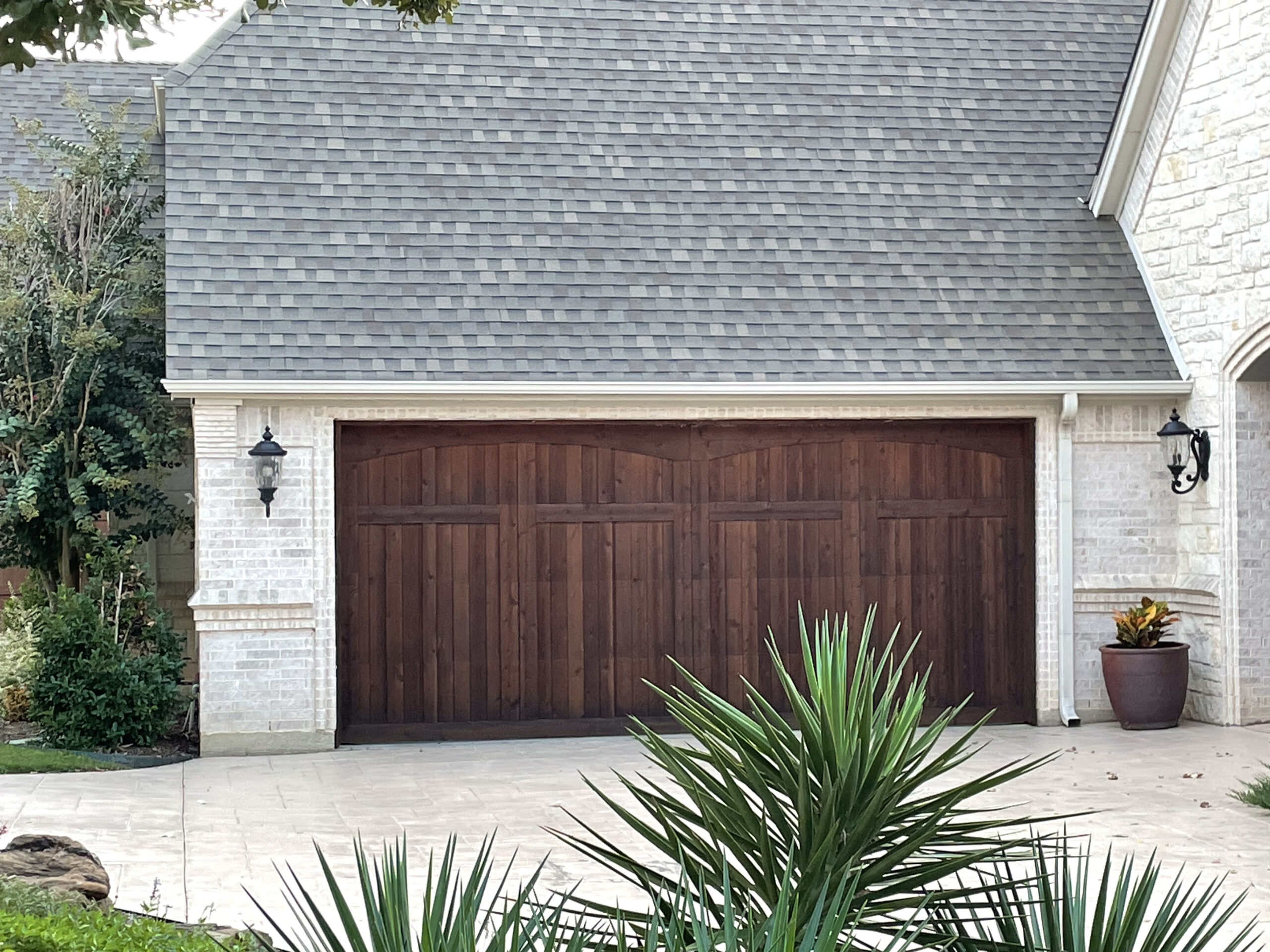
By the time the first 95°F day hits Flower Mound in late May, your garage door has already been working hard for months. The springs have cycled thousands of times since January. The rollers have been through temperature swings from the teens to the 80s. The bottom seal has been drying out from low winter humidity. The opener’s motor has been working against the slight warping that every door does as the seasons change.
A summer maintenance visit catches all of this before it becomes a problem. It’s also the most convenient time to schedule. Homeowners are out of school-year chaos, the weather is good for the tech to be outside the garage, and a tune-up is far cheaper than an emergency repair on a Saturday night in August.
If you’re in Flower Mound, Frisco, or anywhere in the DFW area, here’s why summer is the smart time for a garage door maintenance visit, and what a real tune-up should include.
What Summer Heat Does to a Garage Door
The DFW area is one of the harder places in the country on a garage door. A few specific stresses matter.
Spring tension changes with temperature. Torsion springs lose a small amount of tension as they heat up. A door that was perfectly balanced in March can become slightly under-tensioned in July. The opener has to work harder, and the door can develop a slight sag on one side.
Heat dries out lubrication. The grease in the rollers, hinges, and opener gears thins out in heat. Without fresh lubrication, metal-on-metal contact increases, and you start to hear squeaks, grinding, and a slight roughness in the operation.
Bottom seals and weatherstripping deteriorate faster. Rubber and vinyl seals exposed to Texas UV and heat dry out, crack, and lose their seal. By mid-summer, an older seal may be letting in hot air, dust, and insects.
Paint and finish stress. Composite, wood, and even steel doors expand in heat. A finish that was marginal in spring can fail in summer.
Opener electronics run hot. The motor and control board in the opener generate their own heat. In an uninsulated garage with summer sun hitting the door, the opener can be running near its thermal limit. A struggling opener that’s lasted 12 years can fail in the first week of August.
A summer maintenance visit addresses all of these issues before they become failures.
What a Real DFW Tune-Up Includes
Not all garage door tune-ups are the same. A few are thorough. Many are a quick squirt of WD-40 and a sales pitch for a new door. Here’s what a proper maintenance visit should include.
Door balance test. The technician disconnects the opener and lifts the door manually to about halfway. A properly balanced door should hold in place with minimal drift. If it falls or rises on its own, the springs need adjustment. This is the single most important test on the visit.
Spring inspection. Both torsion springs (mounted above the door) and extension springs (mounted on the sides) are checked for stretch, rust, fraying, and proper tension. Springs have a finite cycle life, typically 10,000 to 25,000 cycles depending on the wire gauge. A technician can tell you how much life is left.
Cable inspection. The lift cables run from the bottom of the door to the spring system. They’re checked for fraying, rust, and proper winding on the cable drums.
Roller and hinge lubrication. All moving parts get a proper garage door lubricant (not WD-40, which is a solvent and can actually attract dust and grime). The technician should use a white lithium or silicone-based lubricant designed for the application.
Opener inspection. The motor, drive mechanism (chain, belt, or screw), and trolley are checked. The technician listens for unusual sounds, checks the force settings, and tests the safety reverse mechanism.
Safety sensor test. The photo-eye sensors at the bottom of the door are tested by placing an object in the door’s path. The door should reverse immediately on contact or obstruction. This is a critical safety feature, especially for families with kids or pets.
Bottom seal and weatherstripping check. The rubber or vinyl seal at the bottom of the door and the weatherstripping along the sides and top are inspected. Worn seals are replaced, which makes a real difference in summer heat and dust.
Hardware tightening. All visible bolts and brackets are checked and tightened. Garage doors vibrate with every cycle, and hardware can loosen over time.
Track alignment. The tracks on either side of the door are checked for plumb and proper spacing. A misaligned track causes uneven wear on rollers and can lead to a door coming off the track.
A proper tune-up takes 30–60 minutes and runs $100–$200 in most DFW markets. Anything significantly cheaper is probably skipping steps. Anything significantly more should come with a detailed breakdown of what you’re paying for.
The Spring Adjustment Question
A common question from homeowners: if the door is working, do the springs really need adjustment?
The answer is sometimes. A door that is slightly out of balance (say, drifting up an inch when released from halfway) can be adjusted to spec without replacing the springs. The adjustment is a tension tweak, not a full re-spring.
A door where one or both springs have reached end-of-life (visibly stretched, rusted through, or making a creaking sound) needs replacement, not just adjustment. A technician will be honest about which one you need.
The cost difference matters. A spring adjustment is included in a tune-up. A spring replacement is a separate repair, typically $200–$400 for a standard two-spring residential door. Knowing which you need keeps you from being upsold.
What a Tune-Up Catches Early
The value of a maintenance visit isn’t the maintenance itself. It’s catching the small problems before they become big ones.
A $150 tune-up can catch: – A spring with 1,000 cycles left before failure – A fraying cable about to snap – A roller bearing about to seize – A misaligned track about to throw the door – A failing opener capacitor in the middle of a Texas August
Each of these would be a $300–$800 emergency repair on a weekend or after-hours call. A planned tune-up on a Tuesday morning in June is dramatically cheaper and dramatically less disruptive.
The Flower Mound Specifics
A few things are worth knowing for homeowners in Flower Mound and the surrounding area.
Many homes are 10–20 years old. The garage doors in this part of DFW are often original to the home, which means the springs have already lived through 10,000+ cycles. A tune-up is also a good time to plan for the eventual spring replacement.
HOA standards matter. Several Flower Mound neighborhoods are governed by HOAs with architectural standards. A maintenance visit is a good time to ask about the door’s condition relative to HOA standards and plan ahead if a replacement is on the horizon.
Summer storms are a real risk. Flower Mound and the broader DFW area get severe thunderstorms in late spring and early summer, often with hail. A post-storm inspection is a good idea after a major storm event, especially if you suspect hail damage.
The demand curve is real. Garage door companies in DFW get slammed in July and August when the heat causes failures. Scheduling a tune-up in May or June, before the rush, gets you a more flexible appointment and more attention from the technician.
When to Schedule
The best time to schedule a summer maintenance visit is mid-May through mid-June. The spring storm season is mostly past, the heat is established but not yet at its worst, and most homeowners are thinking about summer travel and home projects.
If you missed that window, a July or August visit is still very much worth it. The later you wait, the more booked up most companies get. A maintenance visit in late August or early September is the second-best window.
The Bottom Line
A summer garage door maintenance visit is one of the highest-value, lowest-cost services a homeowner can schedule. It extends the life of the door, catches the small problems before they become big ones, and makes sure the system is ready for the hottest months of the Texas year.
If you’re in the DFW area (Flower Mound, Frisco, Trophy Club, Southlake, Keller, or anywhere nearby) and want to get on the schedule for a summer maintenance visit, Meadows Garage Doors serves all of these communities. Work is done by the people who own the business, fully licensed and insured, and never subcontracted.