
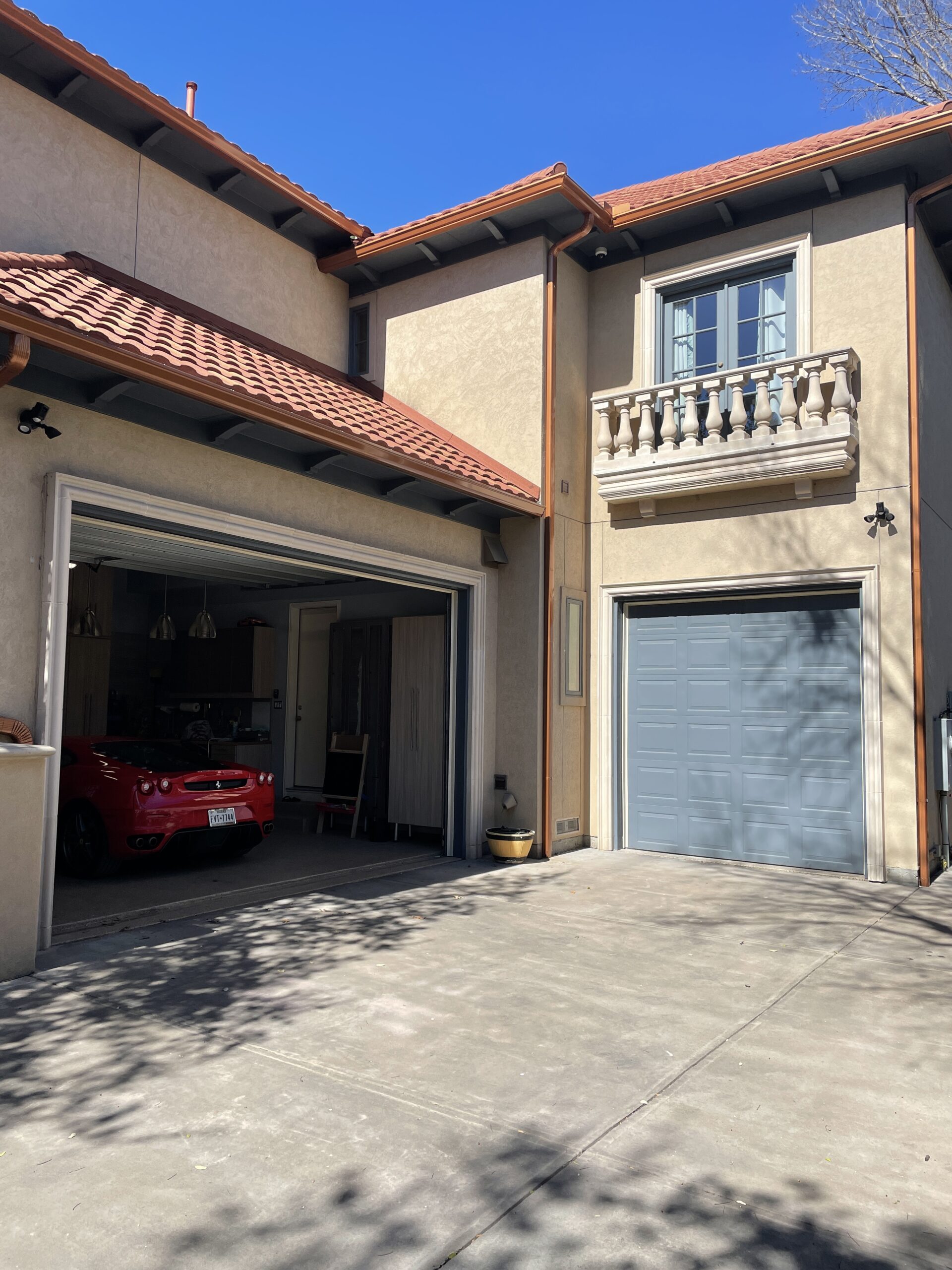
If you have a bedroom directly above your garage, you already know the problem. The opener wakes up the kids, the guest in the spare room, or you, every single time someone leaves for work or comes home late. It doesn’t matter that the door is technically closed. The motor and the movement of the mechanism still travel through the framing, the ceiling joists, and the floor of that room.
Replacing the opener with a quieter model is the most common fix. But the terms “belt,” “chain,” and “direct drive” get thrown around without much explanation, and the price differences are not always tied to real-world performance.
Here’s a clear breakdown of the three main types, how they actually behave in a home with a bedroom above the garage, and which one is the right pick in most cases.
Why the Bedroom Above the Garage Is Special
A garage door opener’s noise doesn’t just radiate out into the driveway. Two things happen at once:
Airborne noise. The motor and the moving parts create sound that travels through the air into the garage, up through the door, and into the room above.
Structure-borne noise. The motor mounts to the ceiling and to a header above the garage door. Every cycle sends vibrations through the wood framing. Those vibrations move straight up into the floor of the room above, especially in two-story homes where the bedroom shares a ceiling joist with the garage header.
This is why a “quiet” opener in marketing materials can still be loud in a real two-story home. You need to dampen both kinds of noise, not just one. The drive type matters for airborne sound. The mounting and isolation matter for structure-borne sound. Get both right, and a bedroom above the garage becomes a normal bedroom.
How Each Drive Type Works
Chain-Drive
The oldest and most common design. A metal chain, similar to a bicycle chain, runs along a rail, pulling a carriage that opens and closes the door. The motor turns a sprocket, the chain moves, the door moves.
Real-world noise: Loudest of the three. The chain itself has a characteristic metallic rattle, and the metal-on-metal contact adds a vibration hum that travels through the rail into the ceiling.
Pros: – Lowest cost (often $150–$300 for the unit alone) – Time-tested; almost every technician can install and repair one – Handles heavy doors reliably
Cons: – Loudest option – Vibrations transmit more aggressively into the framing – Chain stretch over time can cause additional noise and require adjustment
Belt-Drive
A rubber belt, sometimes reinforced with steel or urethane, replaces the chain. The motor turns a pulley, the belt moves, the door moves. No metal-on-metal contact along the rail.
Real-world noise: Noticeably quieter than chain. The belt itself makes almost no sound. The motor is the dominant noise source, and most modern belt-drive openers use DC motors with soft-start and soft-stop, which further reduces the rumble.
Pros: – 50–70% quieter than chain-drive in real-world testing – Smoother motion – Less vibration into the framing – Low maintenance. The belt doesn’t need lubrication
Cons: – Higher cost ($250–$500+ for the unit alone) – Belts can stretch or wear out, though they last many years – Still some structure-borne vibration if mounting is poor
Direct-Drive
A different design entirely. Instead of a chain or belt running the length of a rail, the motor itself rides on the rail and turns a single gear that drives the trolley. Only one moving part in the drive mechanism.
Real-world noise: Quietest of the three in the room above the garage. The lack of chain or belt, combined with a single-gear drive, means very little vibration travels down the rail.
Pros: – Quietest operation in real-world use – Fewest moving parts, which can mean longer life – Compact motor housing
Cons: – Highest cost ($400–$700+ for the unit alone) – Fewer brand choices – The motor unit is heavier and the installation can be a bit more involved
A Side-by-Side Comparison
| Drive Type | Typical Noise (in garage) | Vibration in Framing | Cost Range (unit only) | Best For |
|---|---|---|---|---|
| Chain | Loud | High | $150–$300 | Detached garages, budget installs |
| Belt | Moderate | Moderate | $250–$500 | Attached garages, most homes |
| Direct | Quiet | Low | $400–$700 | Bedrooms directly above the garage |
The Real-World Scenario
A family in Trophy Club with a two-story home: bedroom above the garage, two-car door, kids who nap at noon. The original chain-drive opener was installed in 2003 and has gotten louder every year.
What doesn’t solve it: Replacing the chain with a new chain-drive opener of the same generation. The new motor is quieter, but the fundamental chain mechanism is the same. A small improvement, not a transformation.
What helps a lot: A modern belt-drive opener with a DC motor and soft-start. The kids stop waking up. The vibration is reduced enough that the floor of the bedroom feels solid, not buzzy.
What solves it: A direct-drive opener. In most homes with a bedroom directly above the garage, this is the gold standard. The room above becomes genuinely quiet during operation.
Vibration Isolation Matters As Much As Drive Type
Even the quietest opener can be loud upstairs if the mounting hardware is wrong.
- Use rubber isolators between the motor and the bracket. Many newer openers include these. If yours doesn’t, they’re a $15 add-on.
- Replace the rail hangers with vibration-damping brackets, especially on the section closest to the header.
- Check the door balance. A door that’s poorly balanced pulls harder on the opener, and the extra load creates more vibration. A properly balanced door hangs in place when you disconnect the opener and lift it manually about halfway.
- Lubricate the moving parts of the door itself: hinges, rollers, springs. A noisy door amplifies any opener noise.
- Add weather sealing. A well-sealed garage reduces echo and blocks the airborne noise that escapes into the house through the door itself.
When You Don’t Need a New Opener
Sometimes the noise is the door, not the opener.
- Worn rollers, especially nylon rollers that have dried out
- Hinges that need lubrication
- A bent track
- Loose hardware anywhere along the rail
- Springs that need re-tensioning
A $150–$300 tune-up often reduces noise more than an opener swap would, especially on a door that’s still in good mechanical shape. A trusted local technician can tell you in five minutes which fix makes sense.
The Bottom Line
For most DFW homes with a bedroom directly above the garage, a modern belt-drive opener with proper vibration isolation is the right balance of cost, noise reduction, and reliability. If the bedroom is a nursery, a home office, or a room where quiet genuinely matters, direct-drive is worth the extra cost.
If the existing opener is under 10 years old and just a bit louder than it used to be, a tune-up and lubrication is often the smart move before considering replacement.
If you’re in the DFW area and want a real-world recommendation for your specific door, layout, and budget, Meadows Garage Doors serves Trophy Club, Southlake, Flower Mound, Keller, Frisco, and the surrounding communities. Work is done by the people who own the business, fully licensed and insured, and never subcontracted.